62345f7b31a9b.png)
6234606f98fc0.png)

 العربية

Hiring employees through manpower agencies can offer significant advantages for businesses, particularly in dynamic markets like the UAE. It simplifies recruitment, reduces administrative burden, and provides quick access to a skilled workforce. However, hiring via manpower supply companies comes with a set of legal and regulatory responsibilities that every business must be aware of to ensure compliance and avoid penalties.
This compliance checklist will guide businesses through the key steps and considerations when working with manpower agencies.
_1763973218.jpg)
1. Review Worker Documentation and Legal Status
Every worker deployed through an agency must have a valid visa, an active Emirates ID, and a work permit approved by the labour authority. The agency issues and maintains these, but the contractor must check every document before deployment to avoid fines and site penalties during inspection.
Sponsorship is another critical point. Workers must either be under the agency’s sponsorship or transferred legally to the contractor. Any gap in sponsorship exposes the company to penalties during inspection.
Expired documents are a direct violation. No worker should be allowed on site without updated papers. Contractors are advised to keep scanned or hard copies of all records in project files. These are often requested during labour audits or surprise checks by authorities.
Read more: The Legal Aspects Of Manpower Outsourcing in the UAE
2. Employment Contracts and Wage Protection
Any contracts that are issued through manpower agencies must be compliant with local labour legislation. Each contract should specify the employee's designation, pay, hours of work, overtime pay rate, and leave. Incomplete or vague descriptions of these elements will inevitably lead to disputes and expose contractors to potential penalties.
Contract registration must be completed and recorded with the Ministry of Human Resources and Emiratisation (MOHRE) in the UAE. Contractors are responsible for ensuring this registration is done, as well as keeping a record of the official contract document.
Wages are to be paid through the Wage Protection System (WPS) or another system approved by the labour authority. Payments outside these channels are a violation. Non-compliance can bring fines, inspections, and even suspension of site activity.
Also Read: What UAE Companies Need to Know About the H1 Emiratisation Deadline Set by MoHRE
3. Health, Safety, and Insurance Coverage
Workers must have medical insurance and workplace injury insurance in place. The agency is responsible for arranging coverage, and the contractor must check the policy before deployment.
Agencies are also required to provide safety training. Workers should be briefed on site hazards, safe use of tools, and emergency steps. Contractors can request proof of training or arrange their own safety briefing before work starts.
All workplaces must follow PPE policies. Helmets, gloves, boots, and high-visibility vests must be issued and used. If insurance or safety records are missing, liability falls on the contractor. This can result in financial penalties and delays in site work.
4. Compliance with Working Hours and Accommodation Standards
Agency schedules must comply with labour law on hours, shifts, and weekly rest. Contractors must verify this before workers enter the site. Overtime records should be reviewed separately from regular time sheets. Rates and payment methods must match the labour law, or fines can follow during inspections.
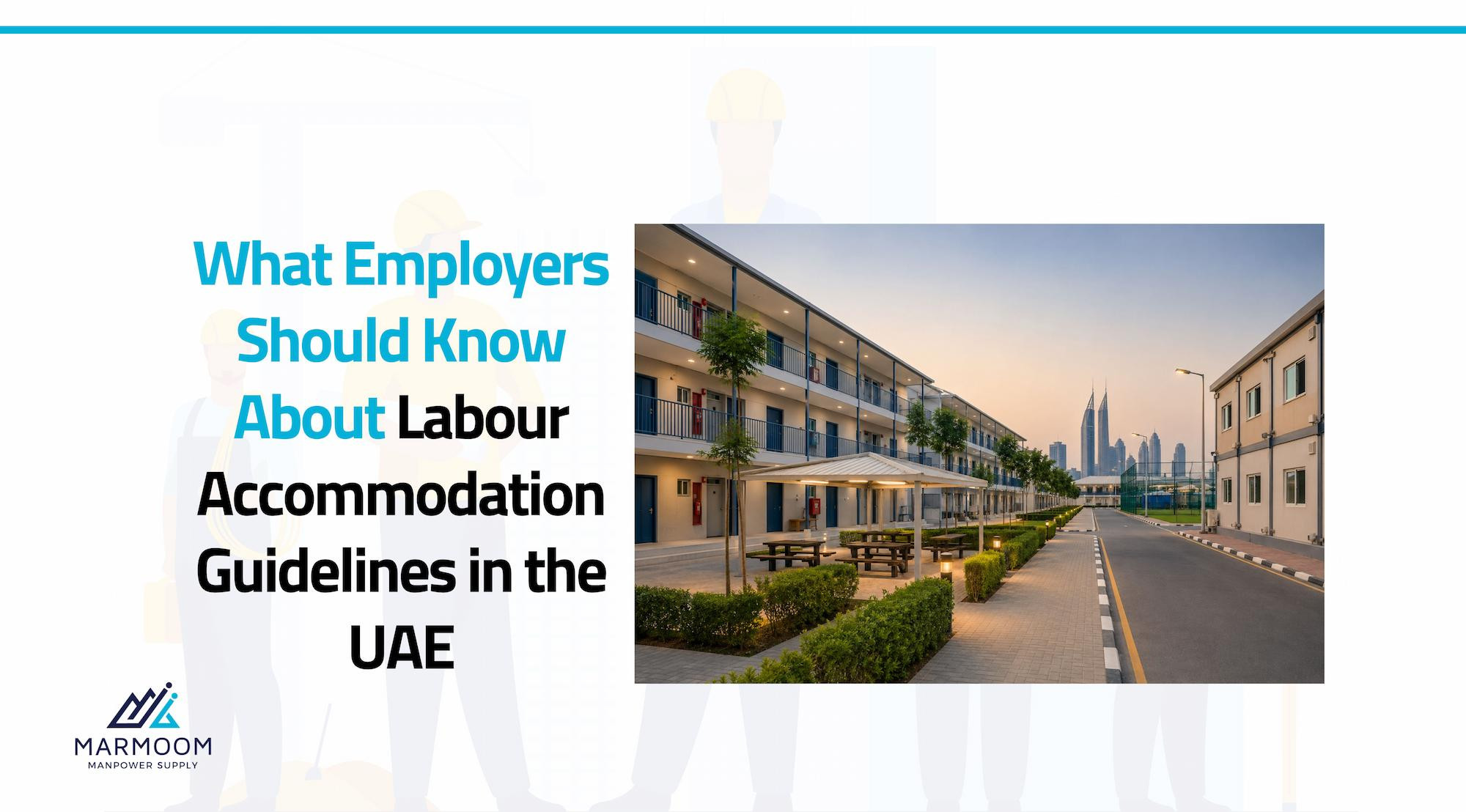
If the agency provides accommodation, contractors should inspect housing for space, sanitation, and compliance with standards. Rooms, sanitation, and common facilities must meet government standards. Records of inspection should be kept on file.
5. Monitor Performance and Compliance Continuously
- Manpower Records: Maintain a list of all workers with name, Emirates ID, visa number, and job role. Update immediately when staff join or leave.
- Document Storage: Keep copies of visas, IDs, permits, and insurance in order. Originals must be available for inspection. Check expiry dates regularly and renew on time.
- Attendance & Payroll: Take attendance every day and note hours, overtime, and leave. Wages should be paid through WPS, and the slips kept on file.
- Inspections & Audits: Store inspection reports and audit notes in one file. Record any corrective actions taken. Files must be ready for inspection whenever labour officers request them.
- Internal Reviews: Carry out routine checks to confirm all records meet labour law. Resolve missing or expired documents promptly to avoid penalties.
6. Anti-Exploitation and Ethical Compliance
- Recruitment fees: Agencies are not allowed to collect recruitment fees from workers. Contractors must verify during onboarding that no payments were taken.
- Placement costs: Travel, visa, and housing costs cannot be shifted to workers. Deductions must be specified in the contractual agreements of the employment.
- Hiring practices: Agencies must provide accurate job details. Titles, wages, and site conditions must match what is written in the contract.
- Misrepresentation: An employer cannot promise one position and then place the employee in another. It is a violation of the employment guidelines.
- Risk: Partnering with agencies engaged in unethical or illegal practices can expose a company to penalties and reputational damage. Copies of the compliance documents should be audited periodically.
7. Periodic Audits and Third-Party Reviews
Manpower contracts and worker records should be checked on a fixed schedule. Audits must cover contracts, visas, IDs, wage records, and safety documentation. Gaps found early can be corrected before inspection.
Internal compliance teams can run these checks, or contractors may bring in external consultants. External reviewers can find gaps that internal checks fail to catch.
You should assess how the agency performed its functions. Not only should the legal documentation required (i.e., licensing, registration, and compliance obligations) be checked at the beginning of the engagement, but also throughout the entire term of the contract.
Performing regular audits helps reduce the risk of compliance lapsing. It enables the contractor to avoid the last-minute penalties, work stoppages, and conflicts during the labour inspections. Finally, keeping a record of the audits helps demonstrate due diligence should the authorities demand proof.
8. Ensure the Manpower Agency is MOHRE-Approved
Before hiring, verify that the manpower supplier is licensed and approved by MOHRE to provide manpower supply services.
- Check for a valid MOHRE manpower supply license.
- Ensure that the license is specifically for manpower supply, not recruitment. Only MOHRE-authorized manpower suppliers can legally deploy workers under their sponsorship.
- Verify sponsorship eligibility and compliance history.
- Keep copies of all approval documents for inspection.
Working with an authorized manpower supply company ensures legal deployment and protects the contractor from penalties.
Benefits of Working with a Compliant Manpower Supply Company
Partnering with a compliant manpower supply company offers several advantages for businesses in UAE:
- Reduced Administrative Burden: The agency handles recruitment, training, documentation, and payroll.
- Regulatory Assurance: The agency ensures all employment is fully compliant with UAE laws.
- Skilled Workforce Access: The agency maintains a pool of trained manpower ready for deployment.
- Risk Mitigation: Clear agreements and proper documentation protect your business legally.
Why Marmoom Manpower is the Right Choice
At Marmoom Manpower, we understand the compliance requirements for manpower supply in the UAE. As a leading manpower supply company (not a recruiting agency), we help businesses access reliable and skilled manpower while ensuring complete compliance with local labor laws.
Our services include:
- Skilled and unskilled labour supply across multiple industries
- Document verification and legal compliance
- Safety training and equipment provision
- Transparent employment contracts and agreements
We support businesses across sectors, including construction, healthcare, hospitality, and manufacturing, helping them achieve operational excellence without compliance risks.
Conclusion
Hiring through manpower supply companies provides organisations with flexibility, rapid access to skilled talent, and reduced administrative workload, but it also requires strict adherence to labour laws, safety regulations, and ethical employment practices. A comprehensive compliance checklist helps businesses minimise legal risks, avoid penalties, and ensure smooth operations. This includes verifying documentation, ensuring accurate employment contracts, maintaining health and safety standards, and upholding fair wage practices.
Partnering with a trusted and compliant manpower supply company like Marmoom Manpower simplifies the process. As a leading manpower supply company in the UAE, Marmoom ensures all workers meet the highest standards of legal compliance, safety, and professionalism. This allows organisations to focus on their core operations while maintaining full compliance. Integrating compliance into workforce planning ensures improved productivity, stronger teams, and sustainable growth in a competitive market.