62345f7b31a9b.png)
6234606f98fc0.png)

 العربية
Contract Staffing vs. Permanent Staffing: Which is Best for Your Business?
By Shajahan Ibrahim
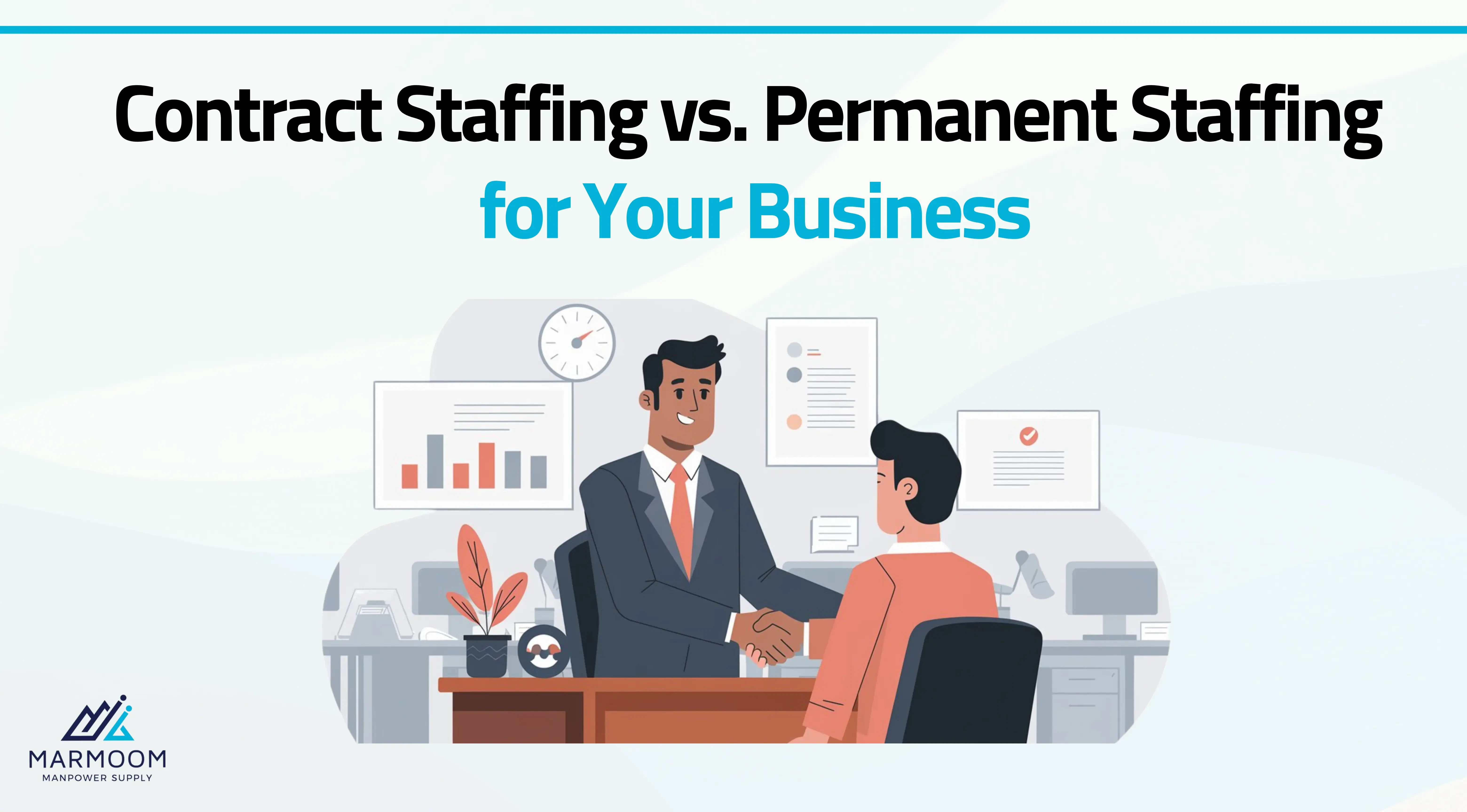
In the current business world, the management of employees has become a critical area of focus for organizations. Permanent staffing and contract staffing are the two major categories of staffing models that are implemented by organizations. This is one of the most important decisions that can affect productivity, expense, and sustainable development of the business. It is crucial to know the difference between the two and determine which one is suitable for the company’s requirements to manage a workforce effectively. In this article, we will be enlightening you on the advantages and disadvantages of both contract staffing and permanent staffing.
Contract Staffing
Temporary staffing, also known as contract staffing, involves recruiting employees for a short period of time. Such employees are hired mainly to address certain project needs or to cater to increased demand during certain periods of the year. Contract workers can be employed through third-party staffing firms or manpower supply companies, which provide companies with niche staffing services in terms of employment where flexibility is valued.
Benefits of Contract Staffing
Contract staffing provides numerous benefits, including:
Flexibility in Workforce Management: Flexibility is one of the most important benefits of contract staffing. Freelancers can easily provide additional manpower to help during busy periods or be dismissed when there is less work to be done permanently. This is quite beneficial for companies with fluctuating sales or undertaking short-term projects.
Cost-Effective Staffing Solutions: Contract staffing is also considered as a feasible solution since it may help a company obtain a specific expertise for a particular period of time. Contract employees do not demand employment benefits, pensions and other incentives that might be demanded by permanent employees.
Access to Specialized Skills: Contract staffing enables an organization to hire professionals with specific skills that are not always needed in the company on a regular basis. This can improve the quality of work and guarantee that projects are accomplished professionally.
Reduced Administrative Burden: In contract staffing the businesses hire the staffing agencies and most of the responsibilities like payroll processing, insurance and legal compliance remain with the agency. This enables companies to concentrate on their main activities without the burden of additional paperwork.
Quick Onboarding Process: Recruitment and selection of permanent employees is more time-consuming than that of temporary employees. Contract staffing helps organizations acquire workers quickly to address specific needs without compromising project timelines.
Risk Mitigation: contract employees enable the employee to be evaluated before being offered a permanent job in the business. This approach eliminates guesswork when hiring, which can help avoid hiring the wrong candidate.
Drawbacks of Contract Staffing
Contract staffing's benefits are offset by several notable drawbacks, specifically:
Lack of Long-Term Loyalty: Contract workers can be less committed to the firm’s objectives than regular employees. Due to their temporary nature, these individuals may not be fully dedicated to the organization.
Training and Knowledge Transfer Issues: Contract workers are usually hired for a limited period of time; thus, training and development may be problematic. Furthermore, when contract employees resign or are let go, their skills and expertise may not be easily transferred to other employees in the organization.
Potential Disruption in Team Dynamics: Constant recruiting and turnover of contract workers are likely to affect the team cohesiveness. The constant shuffling of people might make permanent employees uncomfortable.
Permanent Staffing
Permanent staffing means recruiting employees for the long term or even for an indefinite period of time. These employees are considered the company’s stakeholders and help in the sustainable development of the firm.
Benefits of Permanent Staffing
Some of the key benefits of permanent staffing include:
Stability and Long-Term Commitment: The permanent employees are generally more committed to the organizational objectives and vision of the company. It has been noted that the workers will work hard since they wish to see the company progress since this is where they want to grow.
Improved Team Collaboration: A company's employees are often permanent, which means that they must work for longer periods than temporary staff within the same teams. This can result in an increase in the business's productivity and efficiency, hence good performance.
Higher Investment in Employee Development: Permanent employees are viewed as fixed investments, so businesses are more willing to train them. This is beneficial to the company as it produces a more capable workforce through the new and refined skills learned by the employees.
Increased Loyalty and Employee Engagement: Temporary employees are known to be less committed than permanent employees. However, they are likely to be highly interested in the company's success, resulting in improved performance and low staff turnover.
Better Organizational Knowledge: The permanent employees are generally more familiar with the organizational culture, norms, and objectives. This knowledge enables them to perform their duties more effectively and help make the company more successful.
Consistency in Work: Unlike contract workers who join or leave the company frequently, permanent employees can help ensure that operations continue smoothly without interruption.
Drawbacks of Permanent Staffing
While permanent staffing offers benefits, it also presents several key challenges, including:
Higher Costs: Permanent employees entail long-term costs such as employee wages, allowances, pensions, and other forms of remuneration. These costs can be a burden to companies, especially during periods of economic decline.
Limited Flexibility: A major disadvantage of permanent staffing is that it becomes very difficult to alter the size of the workforce to meet dynamic demand. Layoffs also pose legal and reputational risks, especially when it affects permanent employees.
Longer Recruitment Process: Recruiting and selecting employees for permanent positions is a time-consuming and costly affair. It may sometimes be difficult to locate a suitable candidate for a certain position, and this may cause some projects to be put on hold for some time.
Risk of Employee Burnout: Full-time workers are required to perform various tasks, and this may cause some of them to become exhausted at some point. This can lead to low productivity and demoralization of employees.
Which Staffing Model Is Best for Your Business?
The choice between contract staffing and permanent staffing varies depending on certain criteria, such as the company's current state, future plans, and available capital. Although each model has certain merits and demerits, the best approach may comprise the two methods.
When to Opt for Contract Staffing
Contract staffing is perfect for businesses facing seasonal demands, budget constraints, or requiring specialized expertise for short-term projects.
Key Scenarios:
- Seasonal or Project-Based Work: If your business operates in cycles or has certain discrete projects that call for certain skills, then contract staffing is the best solution. It enables you to hire people when you require them and let go when the project is over.
- Budget Constraints: Contract staffing is especially beneficial for organizations with limited resources that cannot afford to hire permanent employees full-time.
- Need for Specialized Skills: Contract staffing is beneficial for businesses that may need certain specialized skills for a specific project without the necessity of hiring new full-time employees.
When to Opt for Permanent Staffing
Consider permanent staffing for long-term growth, stability, and building a strong team culture.
Key Scenarios:
- Long-Term Growth and Stability: If the business strategy is to grow the company in the long term and require dedicated workers, then permanent staffing is favorable. The permanent employees bring continuity, commitment, and familiarity with organizational traditions and procedures.
- Building a Strong Team Culture: When communication and cooperation are the keys to business processes, permanent staffing offers better working relations and cohesion.
- Employee Development and Retention: For organizations that value and wish to retain their employees, permanent staffing provides more avenues for career growth and progression.
Conclusion
Contract staffing and permanent staffing are both viable options in the current fast-paced business world. In this way, you can ensure that your company has the right mix of temporary staffing for short-term flexibility and permanent staffing for the long term. In any of these cases, hiring a professional manpower agency or staffing firm such as Marmoom Manpower will guide you on how to make the right decision to keep your business competitive in such an ever-changing environment.