62345f7b31a9b.png)
6234606f98fc0.png)

 العربية
Understanding GCC Labor Demand in 2026: A Guide for Employers
By Shajahan Ibrahim
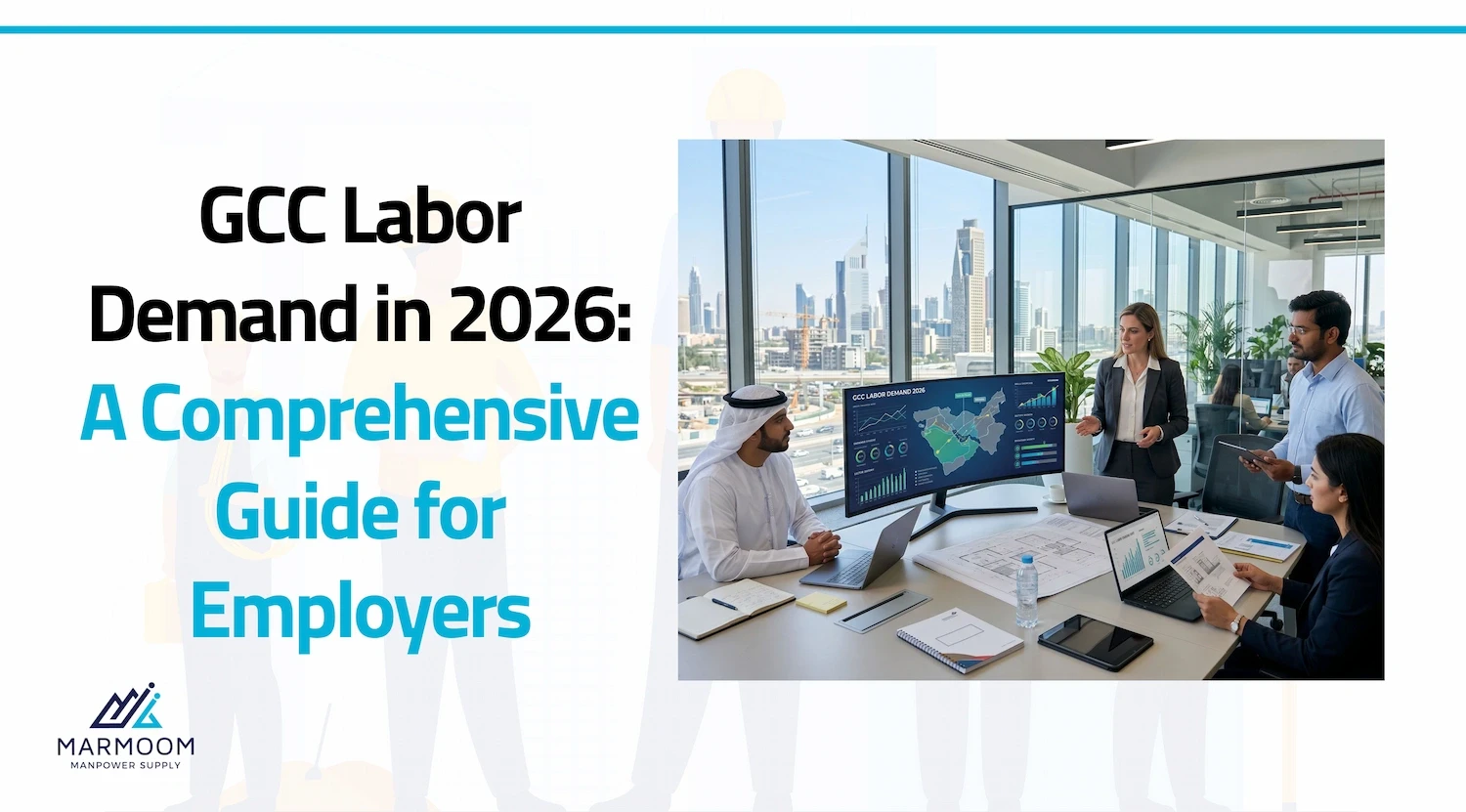
By 2026, the GCC labor market has entered a decisive phase of rapid expansion and transformation. What used to be motivated by long-term policy outlooks is now apparent with the massive projects, high turnover recruitment, and the escalating need to acquire the right talent. Employers in the region are not simply scaling up teams; they are redefining the way workforces are constructed, managed, and sustained.
This change is being driven by economic diversification, digital transformation, and evolving workforce expectations. With expanding opportunities comes greater pressure to secure a skilled and reliable workforce. Employers need to be aware of such changes so that they can make informed decisions regarding the workforce within the competitive environment.
A Market Shaped by Economic Diversification
The GCC economies are steadily reducing their reliance on oil and investing heavily in non-oil sectors. Industries such as technology, tourism, logistics, and renewable energy are driving new employment opportunities across the region. This transition is not theoretical anymore; it is visible in active projects, new business ecosystems, and rising workforce demand.
Governments are key drivers of this transformation, funding large-scale projects and supporting private sector growth. In turn, recruiting continues to be robust for both specialized and operational positions. While companies have been adding employees to their teams, they are also struggling to hire people who fit new job descriptions.
The implication here is that planning needs to be done according to sectoral growth. Companies that know what drives their demand will be able to recruit accordingly.
Key Forces Driving Labor Demand in 2026
There are several factors that interact to shape the labor market in 2026. And it is not merely the growth of the economy but the transformation of industries and the kind of talent they currently require. Employers need to look beyond traditional hiring patterns and understand these underlying causes.
- Technology Growth and AI: GCC nations invest significantly in artificial intelligence, cloud computing, and digital technology, resulting in a great need for specialized workers like AI engineers, data experts, and cybersecurity professionals.
- Infrastructural Development & Mega-Projects: The development of mega-projects and infrastructural constructions requires engineers and project managers, along with a workforce that has a certain skill set.
- Shift from Traditional Education-Based Recruitment System: Employers are emphasizing practical skills and work experiences, and therefore, the assessment process has shifted accordingly.
- Workforce Localization: Emiratization and Saudization ensure that local talents are employed, but at the same time, businesses remain efficient and productive.
The Shift Toward Skills Over Degrees
Among other significant changes occurring in the GCC labor market is an increased focus on hiring based on candidate skills. You can no longer rely on academic qualifications alone in hiring as an organization. The ability to handle a range of tasks is what is gaining more and more significance over being well-educated.
That is more relevant, particularly within those fields that have been undergoing fast transformations and developments. Education degrees or any other form of qualification are no longer more valuable than certification, practical experience, and skills. Hence, it is now necessary to evaluate skills as well as check the experience of applicants.
In-Demand Roles Across Key Industries
Demand for talent will vary by sector depending on specific skill needs within each industry. In some cases, expertise will be the key to hiring, whereas others will seek particular types of personality traits. Nevertheless, the speed of delivery remains central across all sectors of the economy.
Being able to identify in-demand jobs helps to develop hiring strategies and avoid project delays.
- Technology and Digital: AI engineers, cloud architects, cybersecurity analysts, and data engineers are in high demand due to the ongoing digital transformation.
- Healthcare and Life Sciences: Specialized roles such as bioinformatics experts, clinical professionals, and geriatric care specialists are growing steadily.
- Construction and Engineering: Project managers, site engineers, technicians, and the general workforce are essential for ongoing infrastructure development.
- Business and Strategy: Financial analysts, compliance experts, and digital transformation leaders are supporting organizational growth.
Alongside technical roles, soft skills such as leadership, adaptability, and cross-cultural communication are becoming equally important in managing diverse teams.
The Talent Gap and Rising Competition
Most employers are encountering the obvious shortage of skilled talent in spite of high hiring demand. This gap is not limited to highly technical roles. Locating good, experienced manpower has become more difficult even in operational areas.
The market has gone more candidate-driven, where talented professionals have multiple choices. This has increased competition between employers, and retention has now become a significant factor in hiring.
The increase in salaries is continuing, but it is not the sole factor when it comes to decision-making. Prospective employees are also considering long-term benefits, job security, and career advancement opportunities prior to taking up positions.
Smarter Hiring Strategies for a Competitive Market
In an industry where there is excess demand and a lack of available talent, organizations must adopt a new strategy when managing their staff.
The old conventional approach will no longer work as it used to in the current era. Flexibility, planning, and foresight must be employed in the effort to create a stable workforce.
- Provide Full Package, Not Just Salary: Accommodation, medical benefits, and career opportunities are all very important in attracting and retaining staff members.
- Invest in Employee Development Programs: By doing this, organizations will minimize dependency on recruiting from outside sources.
- Find the Right Mix of Locals and Foreigners: Fulfilling domestic labor demands while remaining productive requires proper workforce planning.
- Adopt Staff Flexibility Strategy: This includes manpower supply and contractual staffing strategies.
Industry Sectors Leading Employment Growth
The GCC is experiencing a demand for employment due to several sectors that are still growing at a high rate. These sectors are generating a steady demand for skilled labour and the working population.
Knowledge in these areas assists employers in matching recruitment efforts with demand in the market and remaining competitive.
- Artificial intelligence and technology.
- Medical and specialized medical care.
- The energy projects that are renewable, such as solar and green hydrogen.
- Supply chain and logistics.
- Financial services and fintech.
All of these industries require a robust and reliable manpower, which is why organized manpower solutions are important.
Building a Workforce That Keeps Up with the GCC Market
The GCC labor market in 2026 is dynamic, competitive, and full of opportunities. Employers must be active and not reactive in workforce planning. The capability to get the right talent at the right time can directly influence project schedules, efficiency of operations, and the growth of the business in general.
Companies that are flexible and adapt to evolving hiring trends, emphasize skills, and use flexible staffing designs will be in a better position to prosper. Workforce strategy is not merely an HR activity but one of the business priorities.
Also read: MoHRE Issues Official 2026 Minimum Wage Announcement for Emirati Staff
Partner With Marmoom Manpower for Your GCC Workforce Needs
The GCC labor market in 2026 is defined by high stakes, high velocity, and high reward for employers who plan well. The region is building on an extraordinary scale, and the employers who secure the right talent, through the right channels, at the right time will be the ones who deliver.
Marmoom Manpower is your trusted partner for navigating this landscape. As a leading MOHRE-approved manpower supply company in Dubai, Marmoom brings deep regional expertise, fully compliant hiring processes, and access to a wide talent pool spanning skilled, semi-skilled, and unskilled labour categories. As a registered manpower supply company with an established track record across the UAE and the wider GCC, Marmoom ensures that every worker you hire arrives vetted, documented, and ready to contribute from day one.
Whether you are scaling up for a major infrastructure project, filling technical roles in a growing facility, or planning your long-term workforce requirements, Marmoom delivers reliable, compliant, and efficient manpower solutions tailored to the demands.