62345f7b31a9b.png)
6234606f98fc0.png)

 العربية
What Employers Should Know About Labour Accommodation Guidelines in the UAE
By Shajahan Ibrahim
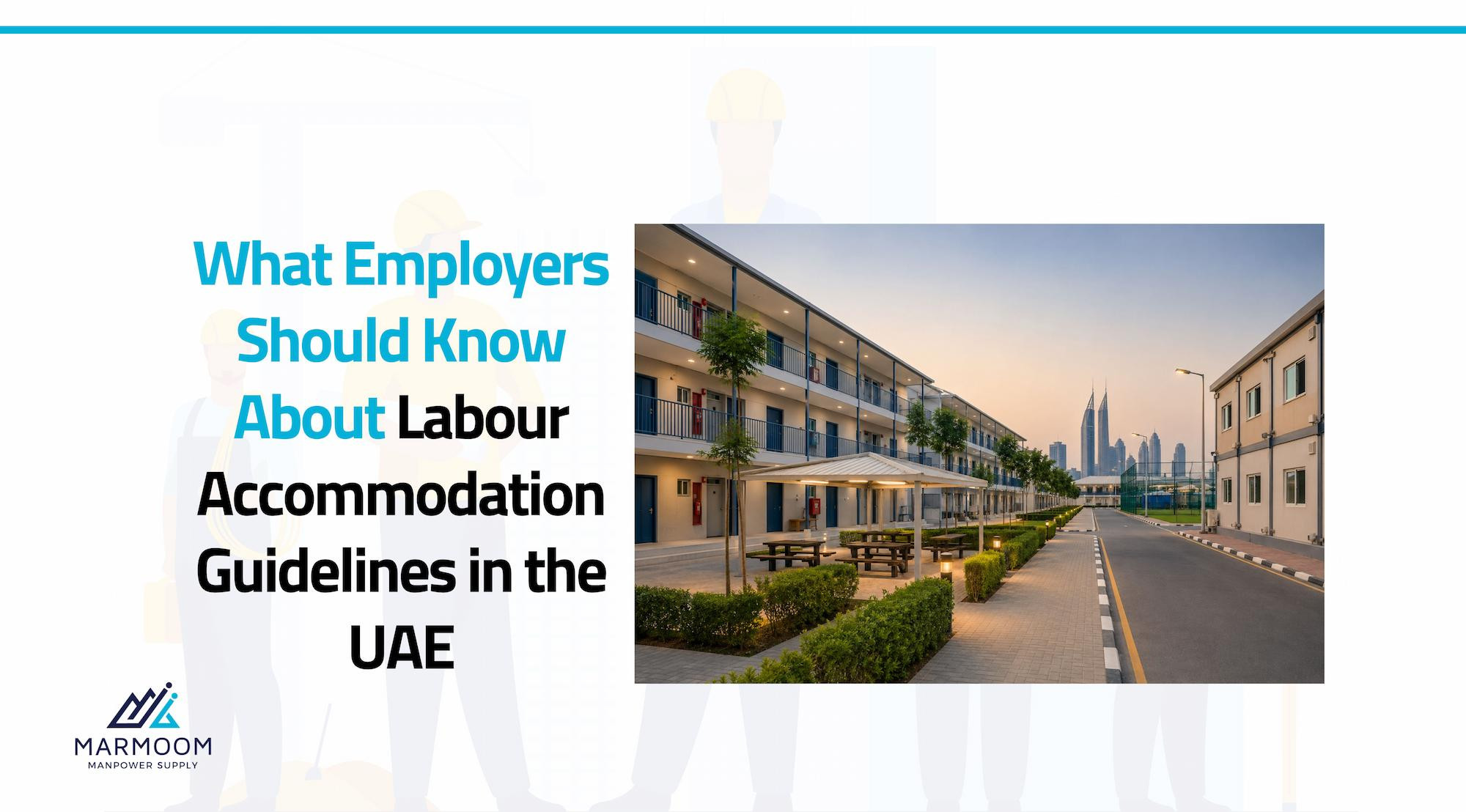
For any company employing large numbers of blue-collar workers in the UAE, accommodation is not a side issue. It is where employees rest, recover, and prepare for the next working day. The quality of that space affects their health, their output, and how long they stay with the company.
Under UAE labour law, employers who provide housing for their workforce carry direct responsibility for making sure that housing is safe, clean, and properly maintained. This is not left to interpretation. The Ministry of Human Resources and Emiratisation, along with local municipalities, has set out clear rules covering space, sanitation, safety, and worker welfare, and these rules are updated from time to time as the country tightens its labour standards.
This guide walks employers through what the current accommodation guidelines actually require, what happens when a company falls short, and how proper planning around worker housing turns into a real business advantage rather than just another compliance box to tick.
What Are Labour Accommodation Guidelines in the UAE?
Labour accommodation guidelines in the UAE are a set of rules that govern how employers house their workers, covering everything from room size and bed spacing to fire safety, sanitation, and access to clean water. These rules exist because a large share of the UAE workforce, particularly in construction, manufacturing, logistics, and facilities management, lives in employer-provided or employer-arranged housing rather than private rented homes.
Not every company is required to provide accommodation. The obligation generally applies to employers with a sizeable workforce, especially those paying lower wage bands. Under the current UAE labour accommodation regulations, establishments with 50 or more workers earning AED 1,500 or less per month are required to provide accommodation, subject to the applicable regulations and local requirements. Individual emirates can also lower that headcount threshold or raise the wage cap for their own jurisdiction, so it is worth checking local rules alongside the federal ones.
The Ministry of Human Resources and Emiratisation, known as MoHRE, oversees registration of approved accommodation and keeps records of which workers live where. Employers covered by the rule must house workers only in MoHRE-registered accommodation and keep that data current.
Key Labour Accommodation Standards Employers Must Follow
The standards cover almost every part of daily life inside a labour accommodation. Below is what employers are expected to provide.
Space and Bedroom Occupancy
Rooms must give each worker enough personal space, with a proper bed, some storage for belongings, and reasonable spacing between beds. Overcrowding is one of the most common violations inspectors flag, and it is also one of the easiest to prevent through basic planning around how many workers a given building can reasonably house.
Ventilation, Lighting, and Air Conditioning
Given the UAE climate, working air conditioning is not optional. Rooms need proper airflow, adequate lighting, and ventilation systems that are maintained on a schedule rather than repaired only after they break down. The 2026 update adds a specific requirement for air filtration systems that are kept in working order over time.
Kitchen and Dining Facilities
Workers need a clean, ventilated space to prepare and eat food, with proper storage, cooking equipment, and a system for disposing of kitchen waste. Where shops are not within easy reach, employers are now expected to arrange food supplies or meals directly.
Toilets and Sanitation
Bathrooms should be hygienic, cleaned regularly, and fitted with running water. Poor sanitation is directly linked to illness and absenteeism, so this is an area inspectors pay close attention to.
Medical Room and First Aid
Workers need quick access to basic medical care, including first aid supplies and a clear path to nearby clinics in case of emergency. Larger accommodation complexes housing 1,000 workers or more are now expected to run a medical clinic on site around the clock.
Laundry and Prayer Room
Washing machines, drying space, and a dedicated prayer room are standard features in compliant accommodation, and they matter more to daily comfort than they might seem on paper.
Fire Safety and Emergency Exits
Smoke detectors, fire extinguishers, alarms, and clear emergency exits are required, along with a working evacuation plan that staff actually know how to follow. Regular checks on this equipment are part of an employer's ongoing duty, not a one-time setup.
Waste Management and Pest Control
Covered bins, scheduled waste collection, and regular pest control keep accommodation liveable and reduce health risks. Cleaning is now expected to be carried out through specialised contractors rather than left informally to residents.
Clean Drinking Water and Hygiene
Workers must have constant access to safe drinking water. The updated rules also require adequate water cooler capacity relative to workforce size, which matters a great deal in outdoor and industrial work where dehydration is a real risk.
Beyond these basics, the newer rules also call for secure personal lockers, free internet access throughout the accommodation, visible information on worker rights in multiple languages, a clear channel for complaints, round the clock security with CCTV coverage, and at least one supervisor for every 200 residents.
Employer Responsibilities and Compliance
Regulatory compliance requires ongoing administrative oversight rather than a one-time audit:–
| Area | Mandatory Action | Risk of Failure |
| Registration | Register housing on MoHRE’s accommodation system and secure municipal permits. | Account blocking & permit suspension |
| Auditing | Conduct monthly internal inspections; log maintenance and HVAC servicing. | Violations found during surprise audits |
| Health & Safety | Assign on-site facility managers; maintain active first-aid logs and emergency transport. | Severe safety fines |
Consequence Of Non-Compliance
Non-compliance with UAE labour accommodation regulations carries severe legal, financial, and operational penalties.
- Heavy Financial Fines: Fines apply for housing non-compliance, and penalties can increase for repeated or life-threatening violations.
- Legal and Administrative Penalties: Temporary or permanent freezing of the company's portal access. It can also stop the issuance of new work permits.
- Reputational Impact: Loss of business reputation and potential blacklisting from major government and private sector tender bids.
Learn more: Understanding GCC Labor Demand in 2026: A Guide for Employers
Benefits of Providing Quality Labour Accommodation
Investing in compliant, high-quality housing delivers clear strategic and operational advantages-
- Improved Employee Wellbeing and Morale: Restful living environments, quality meals, and clean sanitary conditions reduce fatigue and boost overall morale.
- Higher Productivity and Retention: Healthy, well-rested employees experience fewer work-related illnesses, perform better on job sites, and display higher loyalty to the organization.
- Better Compliance with UAE Labour Laws: Adhering strictly to regulations protects the business from costly penalties and administrative suspensions.
- Enhanced Company Reputation: Maintaining high welfare standards positions your business as an ethical employer of choice. It also improves your brand image among clients and tier-one contractors.
- Reduced Operational and Legal Risks: Proactive safety measures drastically lower the risk of site accidents, fire hazards, and regulatory shutdowns.
Best Practices for Employers
- A few habits separate companies that stay compliant from those that end up scrambling before an inspection.
- Run accommodation audits on a set schedule, not just when problems come up.
- Keep cleanliness and hygiene consistent, with clear routines rather than occasional deep cleans.
- Stay ahead of maintenance issues instead of waiting for equipment to fail.
- Arrange transportation for workers where accommodation sits some distance from the worksite.
- Deal with worker complaints quickly, before small issues turn into bigger ones.
- Work with an experienced manpower provider that already understands UAE accommodation rules and outsourcing manpower requirements, rather than building this expertise from scratch.
That last point matters more than it might seem. Managing housing for a workforce that runs into the hundreds or thousands is a full-time job on its own. Many companies handle it by outsourcing manpower supply to a partner who already manages recruitment, documentation, transport, and accommodation together, which frees up internal teams to focus on the actual work rather than on housing logistics.
Read more: How the UAE’s Vision 2031 Is Transforming the Future of Manpower Outsourcing
Conclusion
Labour accommodation is not a side detail in workforce management, it is central to it. Meeting UAE guidelines protects workers, keeps a business on the right side of MoHRE regulations, and supports the kind of stable, productive workforce that every labour-intensive business depends on.
At Marmoom Manpower, we provide fully managed, statutory-compliant workforce solutions tailored to your operational requirements. By partnering with Marmoom, businesses mitigate regulatory risks, streamline workforce logistics, and ensure that their personnel live in fully certified, high-standard accommodations across the UAE.
Contact Marmoom Manpower today to discuss compliant workforce supply solutions for your upcoming projects.